

Housing Planning
Housing is a critical component of the economic stability and community vibrancy of the Merrimack Valley. MVPC works collaboratively with municipalities, state agencies, and regional partners to address housing challenges and develop actionable strategies that support housing growth and affordability. This work includes regional and local housing planning as well as zoning and policy support to help communities proactively respond to housing demand and evolving state policies.
Housing Production Plans
MVPC supports communities across the Merrimack Valley in developing Housing Production Plans (HPPs) that meet state requirements while reflecting local priorities. These plans provide a data-driven framework for increasing housing supply, supporting affordability, and guiding policy decisions over a five-year planning period.
MVPC recently updated each municipality’s Housing Production Plan. Local HPPs provide communities with a framework for advancing housing production efforts and help align local policy priorities with broader regional and state housing strategies. These plans feature a housing needs analysis, along with locally tailored implementation strategies informed by community engagement efforts.
MVPC is currently developing an updated regional HPP, building upon previous regional and local efforts and incorporating updated data. The Merrimack Valley Regional Housing Production Plan provides a broader context for local planning and identifies shared challenges. The goal of the plan is to align municipal housing policy as well as support coordinated housing growth across the region.
Communities Housing Production Plans
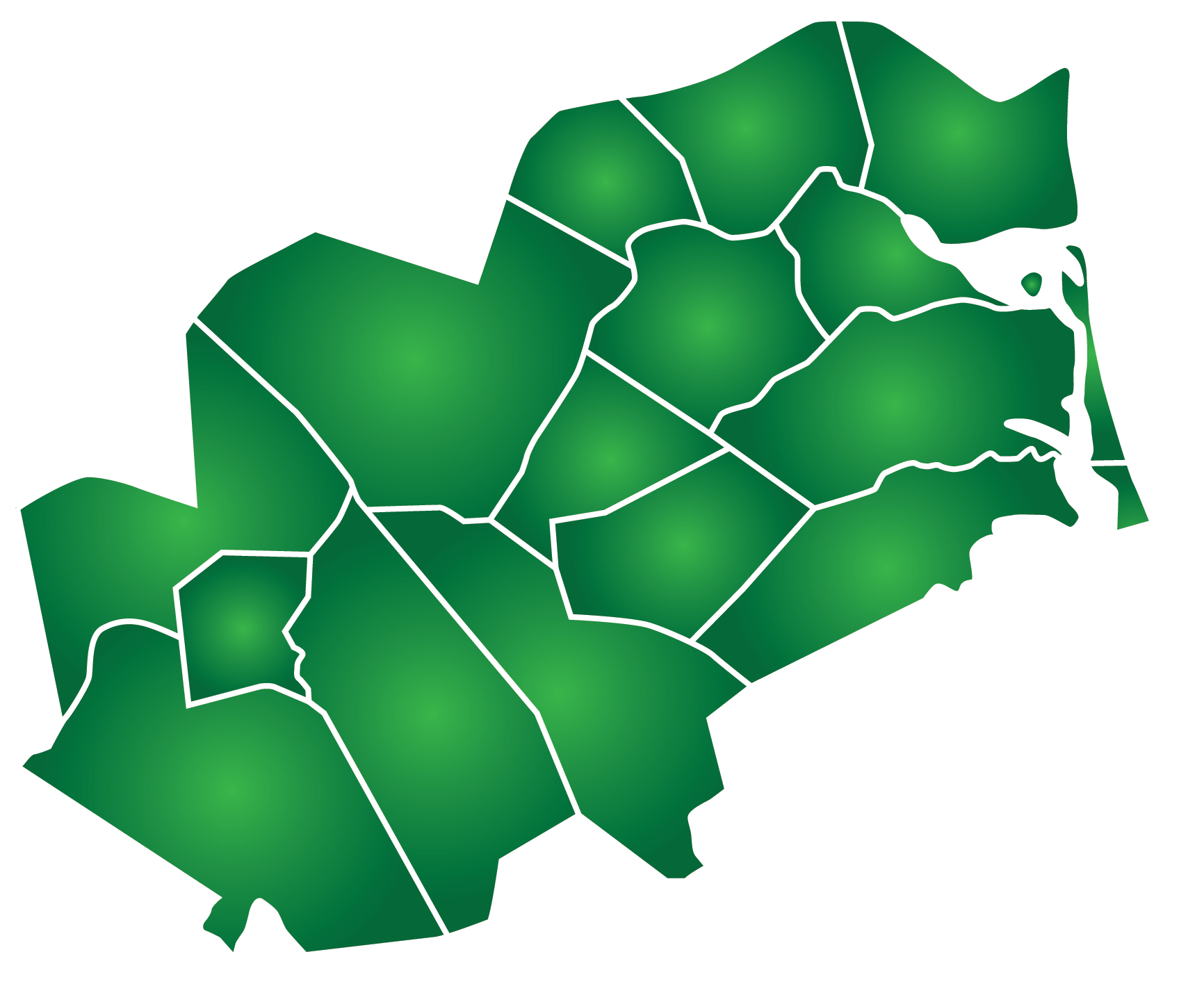
For each municipal Housing Production Plan, please click on its location.

MBTA Communities Zoning & Implementation
MVPC provided extensive technical assistance to support Merrimack Valley communities in complying with the MBTA Communities multi-family zoning requirements. Through sustained local planning efforts and extensive regional support, all fifteen communities in the Merrimack Valley successfully adopted multi-family zoning ahead of their statutory deadlines.
MVPC’s role extended beyond zoning adoption to include capacity modeling, public engagement support, and coordination with the Executive Office of Housing and Livable Communities. Communities are now well positioned to move from compliance toward encouraging future multi-family housing growth.
Community Catalyst Fund
MVPC is now supporting communities as they pursue the Community Catalyst Fund and other state resources to advance infrastructure investment and site readiness needed to develop new multi-family housing. This next phases focuses on transforming zoning reform into real housing production efforts.
Zoning & Housing Policy Technical Assistance
MVPC provides planning and policy assistance to help communities modernize zoning and implement best practices to support the development of a range of housing types. This work supports both proactive housing planning and alignment with state housing policies.
Accessory Dwelling Units (ADUs)
In 2024, Governor Healey signed the Affordable Homes Act, which requires all communities to allow Accessory Dwelling Units (ADUs) by-right in single-family residential zoning districts. ADUs are smaller housing units located within or on the same lot as the primary dwelling.
ADUs provide flexible housing options:
-
- Support aging in place for seniors
- Create affordable housing for younger residents or caregivers
- Help homeowners offset housing costs through rental income
Chapter 40B – Comprehensive Permit
Chapter 40B applies to communities where less than 10% of their housing stock is affordable, as defined by the state’s Subsidized Housing Inventory (SHI). The Comprehensive Permit Law enables local Zoning Boards of Appeals to approve housing developments if at least 20-25% of the units are designated as affordable.
Chapter 40R – Smart Growth Overlay Districts
Chapter 40R enables communities to create Smart Growth Overlay Districts that allow higher-density residential or mixed-use development in suitable locations with existing infrastructure and transit access. Projects under this zoning must be allowed by-right or with limited site plan review, with a minimum of 20% of housing units designated as income-restricted. Additional information on Chapter 40R may be found here.
Communities that adopt Smart Growth Overlay Districts can receive:
- Zoning adoption incentive payments
- Increased state funding eligibility
- Smart Growth School Cost Reimbursement (Chapter 40S) for eligible educations costs associated with new housing
Chapter 40Y – Starter Home Zoning Districts
Chapter 40Y is a recently established state program designed to encourage the production of starter homes. According to this statute, a starter home is considered a single-family home under 1,850 square feet and may have an Accessory Dwelling Unit up to 600 square feet. In a Starter Home Zoning District, the homes must be allowed by-right at a density of at least 4 units per acre with at least 50% of the homes requiring three or more bedrooms. Communities that adopt Starter Home Zoning are eligible for financial incentive payments upon adopting the zoning, as well as bonus payments for each starter home constructed within the district. EOHLC recently released draft regulations for the Starter Home Zoning, which can be found here.
Dimensional Standards, Permitted Uses, and Design Guidelines
Zoning regulations are critical for determining the scale, type, and character of housing development. Requirements related to lot size, setbacks, parking, height, and allowable uses can either facilitate or significantly constrain housing production.
Updating these regulations is often one of the most effective ways communities can remove barriers to housing development.
Inclusionary Zoning
Inclusionary zoning policies require or incentivize new residential developments to include a certain percentage of affordable housing units. These policies are one tool communities can use to help expand affordable housing options and make progress toward the state’s affordability thresholds. Inclusionary zoning bylaws can be tailored to local conditions and community goals, with flexibility around affordability levels, applicability thresholds, and incentives such as density bonuses.
Communities may adopt inclusionary zoning that requires new housing developments to include a certain percentage of affordable housing. This zoning helps communities reach the minimum threshold of affordable housing outlined by Chapter 40B, and helps support affordable housing production goals.
Mixed-Use and Multi-Family Zoning
Allowing mixed-use and multi-family housing by-right is a critical strategy for increasing housing production and diversifying housing options. Mixed-use zoning typically allows residential units above ground-floor commercial space and is most commonly seen in downtowns and village centers, supporting both housing goals and economic vitality.
Multi-family zoning encourages a broader range of housing types that are often more attainable than single-family homes. Concentrated housing development also supports environmental sustainability by preserving open space and encouraging walkable, transit-oriented development.